Articles That Inform
Explore articles, research, and practical insights from Levi Lyle covering mental health, ADHD, relationships, anxiety, and personal development.
Voices from the Field: Farming My Values
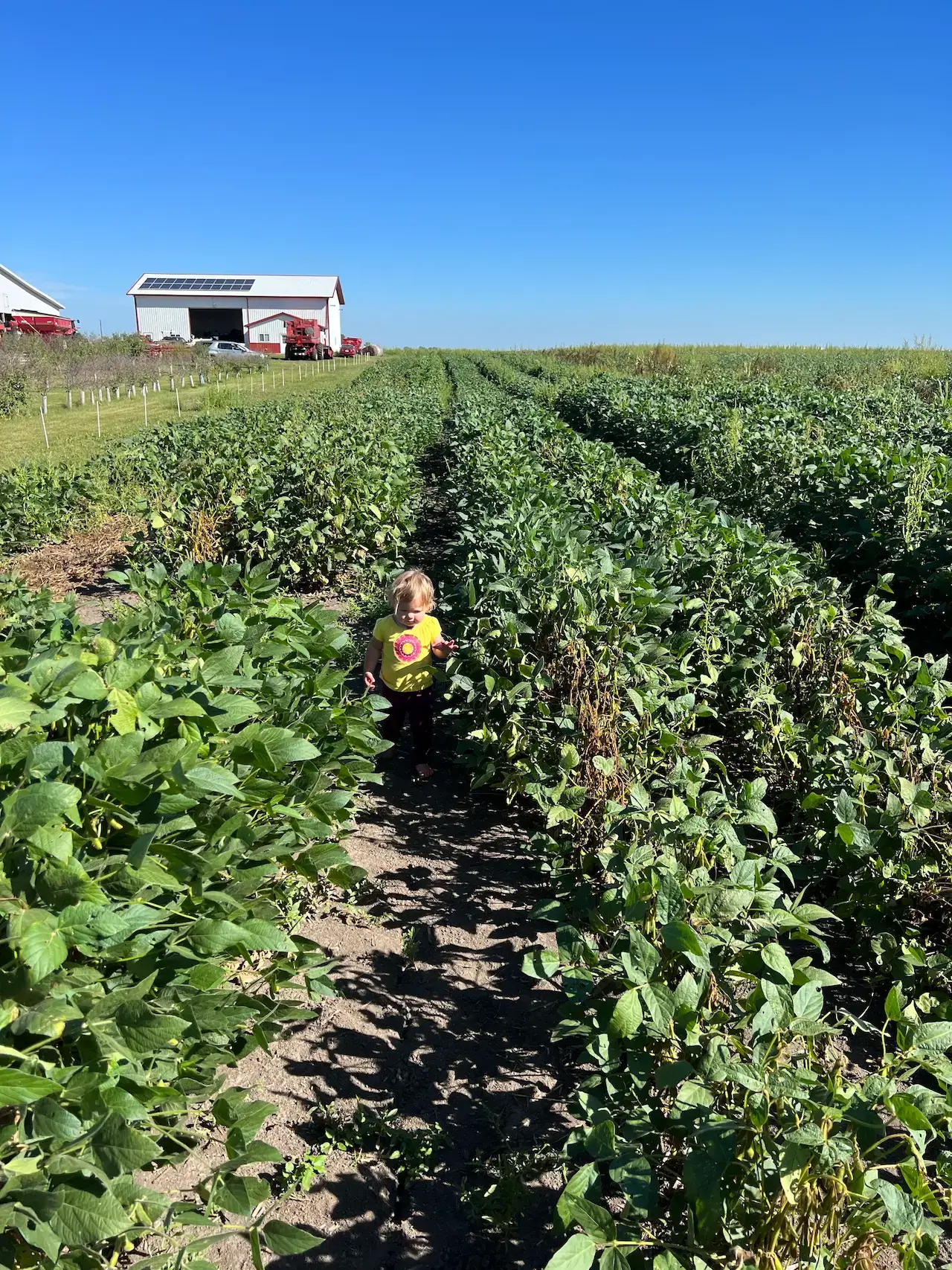
I live in Washington County, Iowa and farm corn and soybeans, as well as niche fruit crops like honeyberries, tart cherries, and aronia berries. Along with my wife and children, I sell our products directly to market and manage our farm as a U-pick. Our row crops are 600 acres of conventional corn and soybeans, along with 60 acres of organic.
I am a graduate of The University of Northern Iowa with a B.A. in Science Education with an Environmental emphasis and a Master of Arts Education in post-secondary education: student affairs. I have been an organic inspector and now consult on the topic of organic transition.
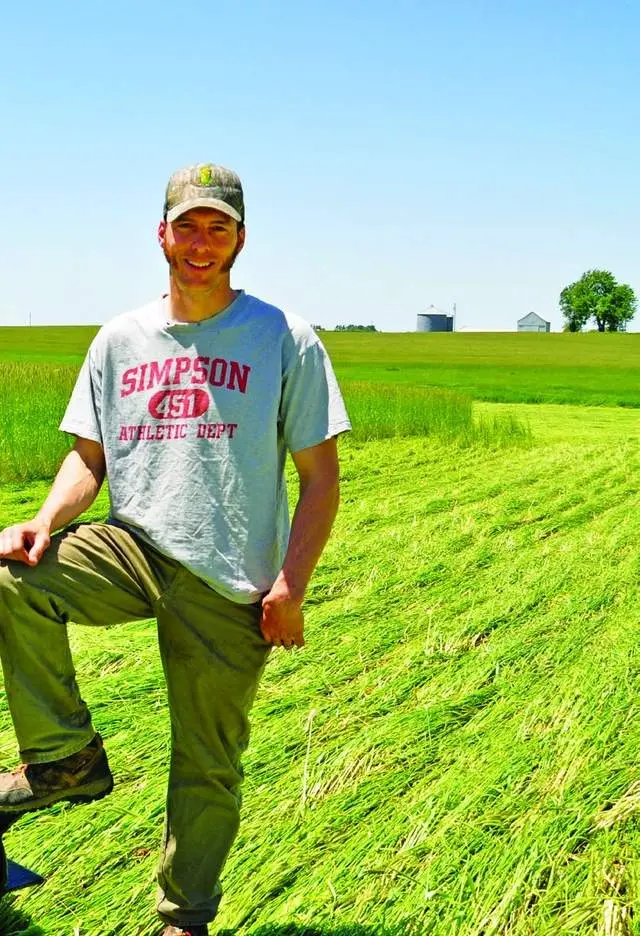
Five years ago, I began using the conservation no-till practice of roller-crimping rye on organic soybeans. These soybeans are grown without synthetic pesticides or fertilizers in accordance with the National Organic Program standards. While conservation no-till is not required under organic, it is a practice I’ve found to be beneficial on my land.
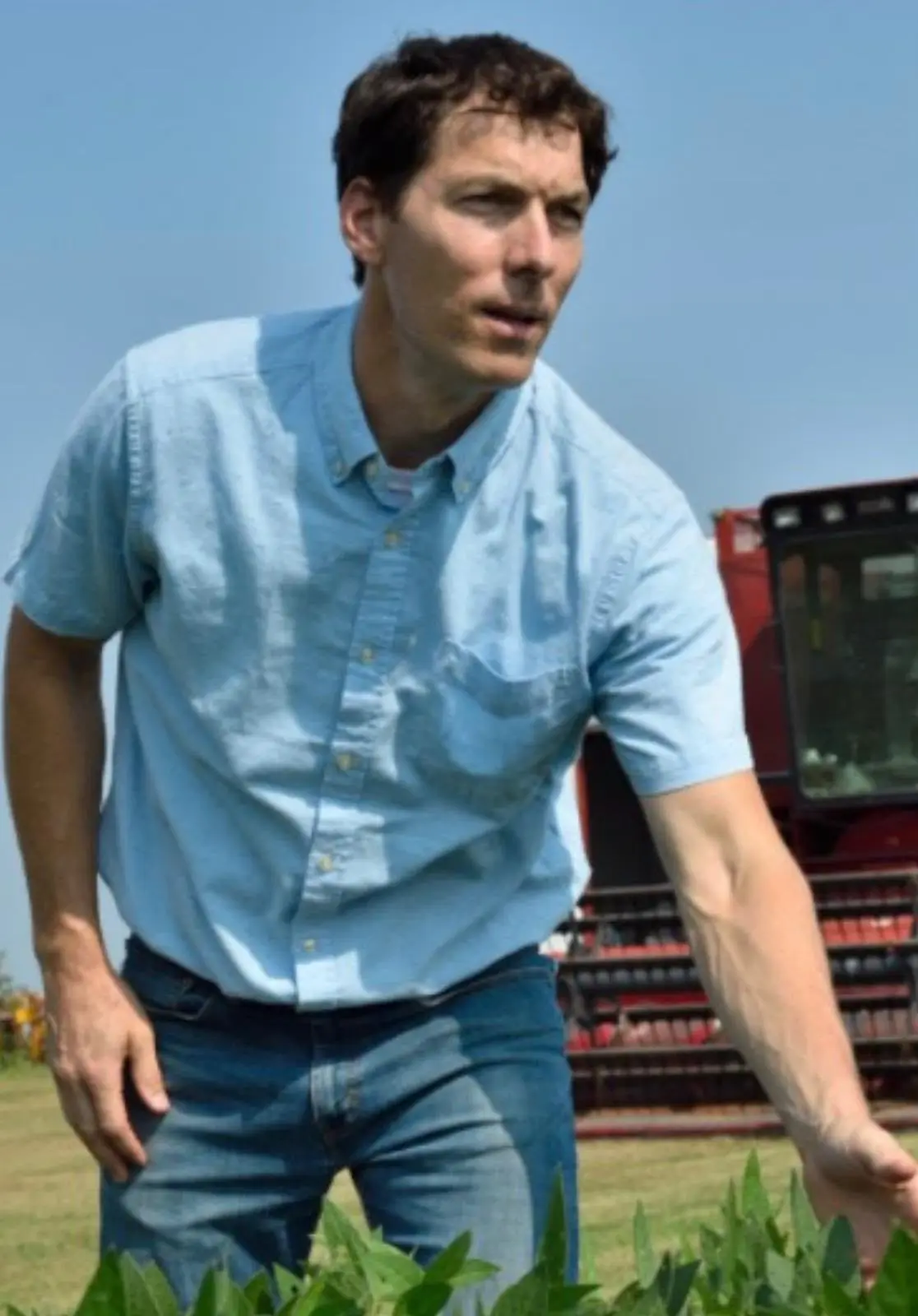
When the rye cover crop reaches maturity in early June, it is pushed down and “crimped” by the roller-crimper, effectively terminating the cover crop without taking it out of the ground. Once the rye has been rolled, soybeans are planted. I accomplish this by coalescing a front mounted roller-crimper and planter on the tractor in a one-pass system.
I use an eyes-to-acres philosophy, a concept popularized by Wes Jackson of The Land Institute, which aims to create interdependence and symbiosis in agriculture. The one-pass approach cuts down on labor, fuel, and soil compaction as I plant soybeans into a rye cover crop. At first, I sought to use the system on my organic acres, but since have found I can profit by using the practice on the conventional acres. I have eliminated herbicide use across much of my soybean acreage.
By allowing the cover crop to remain alive in the soil as long as possible, the cash crops reap multiple benefits. In addition to the cover crop mulch suppressing weeds, I am feeding the microbes and putting armor on the soil. This also fulfils an important aspect of the organic system plan requirement of USDA Organic-certified farms, which additionally includes a three-year minimum rotation and identified soil health practices. By using no-till, cover cropping, and roller-crimping, I am protecting the soil from sunlight (which causes evaporation of water and gassing-off of carbon) and boosting carbon sequestration in the prairie ecosystem— a role once filled by buffalo in stampede. Further, this provides a valuable service to society by sequestering carbon from the atmosphere in the roots of the plants.
The ability to compete with conventional systems is tied up with the question of yields and profitability, a consideration that weighs heavily on any farmer. However, using these regenerative methods is improving my profits. Traditionally, farmers in this region make two herbicide passes in their fields. In recent years, some have resorted to three, sometimes four trips, and they still have weeds due to herbicide resistance. In addition to using fewer or sometimes no herbicides, I have found that planting later consistently results in immediate crop emergence because soil temperatures are more favorable. Delayed planting eliminates the need for neonicotinoid pesticidal seed coatings, notoriously associated with the decline of the honeybee and dangerous to handle with bare hands. This allows for the purchase of cheaper, non-coated, soybean seeds that are non-GMO, a requirement of organic production.
It is clear: one pass farming leads to less herbicide use; later planting leads to elimination of pesticides. These together lead to fuel savings and less expensive inputs. All these lead to an economic advantage.
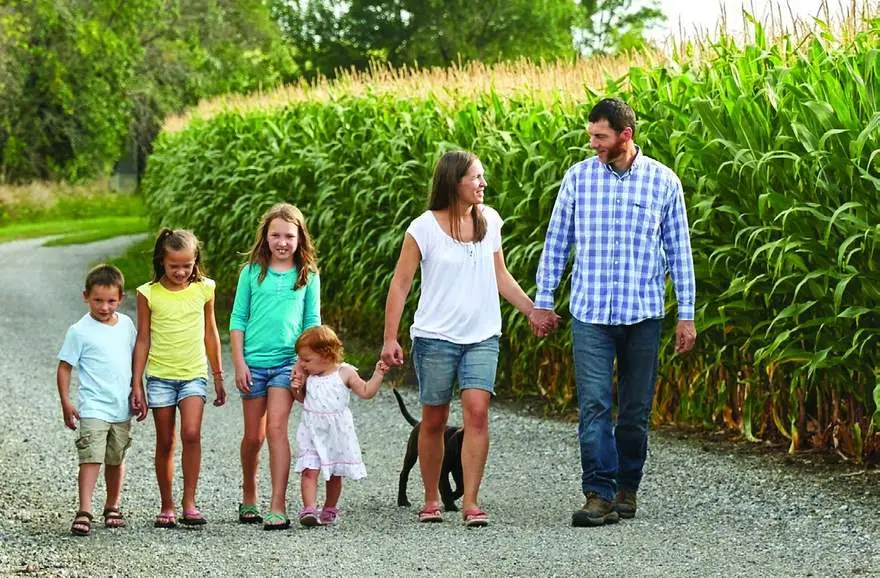
To me, the intangible benefit of being able to touch the seeds I am planting is part of the eyes-to-acres philosophy. I used to worry when I came home that my family would be exposed to pesticide and herbicide residues on my clothing. Now that worry is gone. Also, I have begun to see the return of butterflies and bees in my fields. Further, feeling like my children, who range in age from 5-13, can safely participate in the farm is greatly rewarding.
I have been incredibly happy with the amount of cost I am saving by roller-crimping instead of using herbicide passes. It is not about who can raise the most corn; it is about building soil health and maximizing the return on investment.
In corn, I experiment with inner-seeding cover crops between rows. These covers include radish, sorghum-sudangrass, and oats that winter kill, as well as various clovers (specifically selected due to their less aggressive growth habit), hairy vetch, and peas to fix atmospheric nitrogen. Iowa State University is conducting a No-till Organic Field Trial on my farm where we are experimenting with roller-crimping hairy vetch to plant corn.
My highly diversified farm is evidence of an appropriate eyes-to-acres ratio that provides the necessary husbandry of local land. Also, an appropriate eyes-to-acres ratio on my farm has allowed greater flexibility and adaptation when necessary, such as widening the window for planting and harvest.
There are a lot of other things I am proud of, such as the development of microbiology in the soil, in which the number of micro-organisms in the top inches of one acre can equal the weight of two African elephants. Also, I own an implement called a weed zapper, which uses high voltage electricity powered by the tractor’s power take-off. This is an effective alternative to herbicides in organic soybeans.
In nature, natural order shows us again and again a predisposition toward interconnected and interdependent relationships. Systems of agriculture, if they are to meet the demands of our future, must unwaveringly be built upon principles of nature. The designers of modern systems are reluctant to accept the idea that, in nature, a whole is made up of disparate parts that, when addressed individually, lose the functional synergy of the whole.
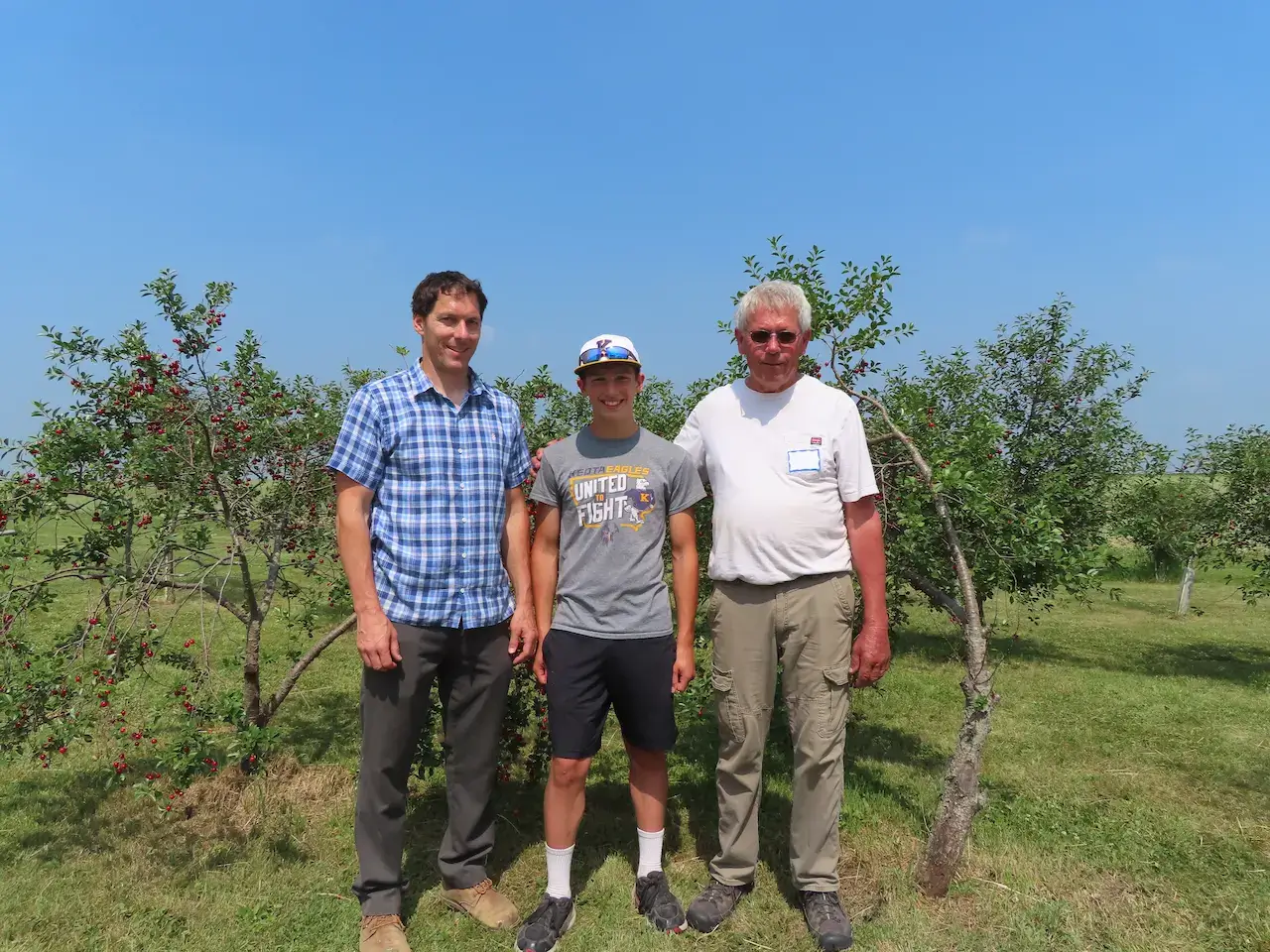
There are barriers which discourage young farmers from entering agriculture: the high cost and limited access to farmland; start up investment in equipment and inputs; experience in farm management and the array of highly specialized skills; and the uncertainty and volatility of markets. Statistics reflect these obstacles to entry with the average age of U.S. farmers bottlenecking to 57.5. Just 16% of farmers are age 35 or under. These future leaders represent 240,141 farms (National Agricultural Statistics Service, 2017, USDA). Without support and encouragement from my father, who still is actively involved in the day-to-day operation, I would have had difficulty getting started.
We can anticipate the shift from an extractive paradigm to one of regenerative stewardship will take time. To catalyze a more functional system, I am piloting the first Community Sponsored Agriculture (CSA) model coalesced with GHG Mitigation to monetize principles in regenerative stewardship on my farm. The CSA I began, called Carbon6CSA, values the most important system of all: that of our human communities. I endeavor to create value in principles that will remain staples of rural life, husbandry of land and regenerative stewardship.
While many farmers profitably make the transition to organic production, profitability alone is not enough to sustain a farmer’s motivations. To endure the challenges, I fall back on my commitment to a community that can support more small producers, which in turn support more local businesses to service those producers. It could mean the difference in keeping the local school open. It means giving the next generation an opportunity to farm. It is those reasons, not just profits, that drive me to succeed.
blog: www.levilyle.com
Facebook: @levilylefarm
YouTube: LeviLyle
National Agricultural Statistics Service (NASS) 2017, USDA. www.nass.usda.gov