Articles That Inform
Explore articles, research, and practical insights from Levi Lyle covering mental health, ADHD, relationships, anxiety, and personal development.
Paying Farmers to Sequester Carbon for the Benefit of All
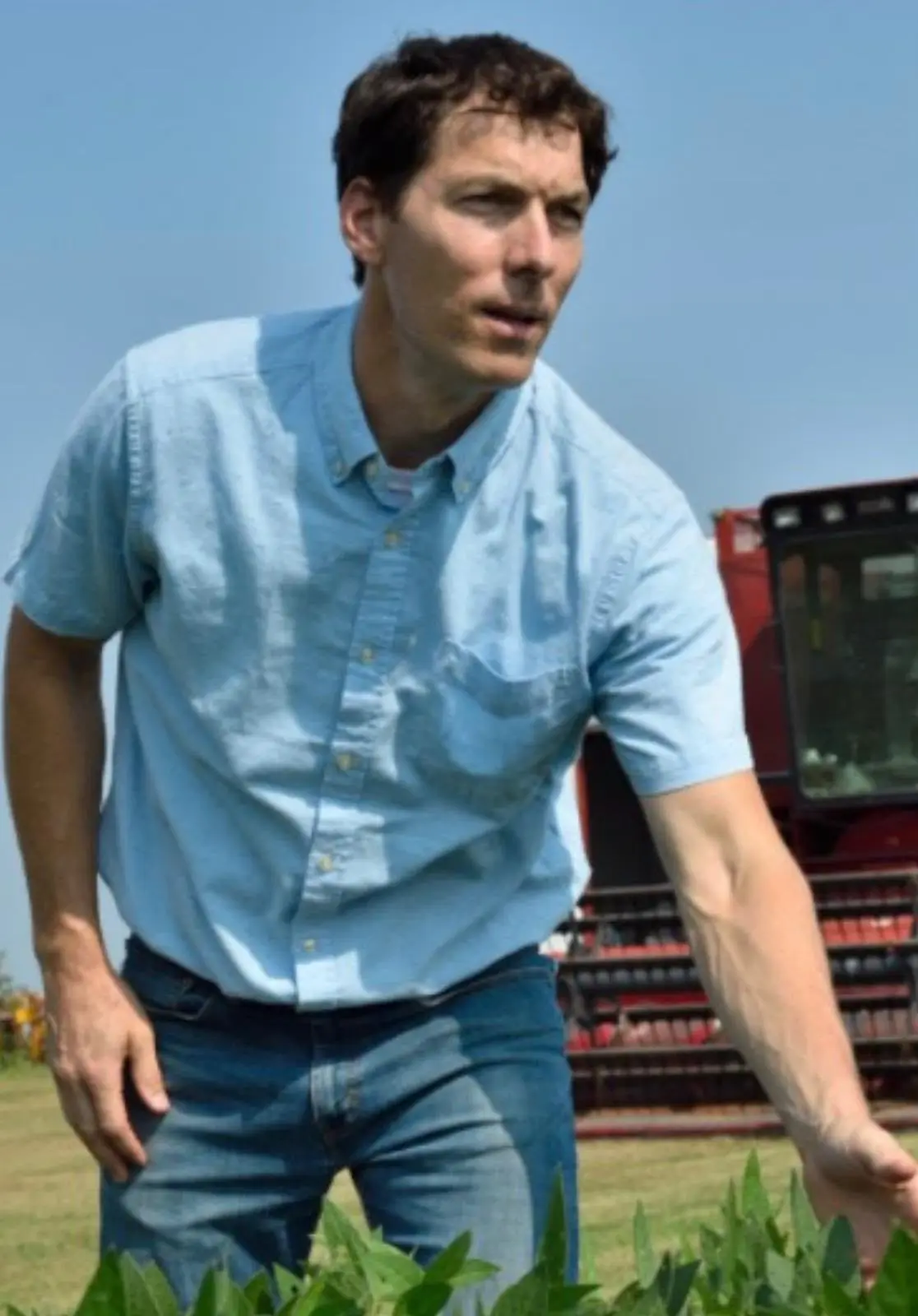
When Levi Lyle thinks about the future, he practically buzzes with excitement.
“We’re on the cusp of real changes,” Lyle says. “We’re going to shift the way people see the world. It’s that shift that will facilitate change in how we live, whether you’re a farmer or not. We need to completely turn upside-down how we see our relationship with the earth.”
Lyle — a Keota, Iowa, farmer who worked with his father to transition their farm to organic practices several years ago — believes the future of farming is inextricably tied to carbon sequestration, and what he sees as a real prospect for change.
“The carbon market is a door wide open for farmers to come to the table,” he says. “All farmers have to do is pull the equipment out of the shed. We don’t have to wait for some new technology to come along.
“That’s what industry is trying to do — develop technology that’s going to save the day and help us lessen the carbon in the atmosphere. Farmers are ready to roll. All we’ve got to do is sell farmers on the concept that it matters.”
For that sales pitch to work, Lyle says, two things have to happen. First of all, farmers must be supported by their communities.
“We need our society to be on board,” he says. “Local communities have to corral around the effort to form this new paradigm in agriculture. That’s what will make for a lasting change and shift our culture.”
The second requirement, according to Lyle, is monetary.
“Carbon has to be worth something for farmers to take the sequestering of it seriously,” he says. “Right now there are a couple of companies out there offering contracts to farmers to sequester carbon. They say, ‘We will do the paperwork to get the offsets marketed and you will get paid per ton of carbon you sequester.’
“That’s an awesome development, and it’s good that those companies are out there. But, frankly, it’s insulting that they say carbon is only worth $10-15 per ton, because it costs the farmer $25 per acre to put a cover crop out.”
Carbon as a Commodity
According to Lyle, the most effective way to ensure farmers are being paid appropriately for the work they do to sequester carbon is to treat carbon like any other commodity.
“If we can value the carbon we’re sequestering like we value the corn we’re growing, then a farmer can go grow his carbon crop,” Lyle says. “The only difference is, he’s pulling carbon out of the atmosphere and putting it into the soil, while corn leaves the field and goes down the Mississippi River. It needs to be treated like a commodity that has a specific, identified value. That would make it so any farmer could be a carbon farmer.”
However, Lyle emphasizes it will take advocacy on the part of farmers in order for them to reach the point where they’re being appropriately compensated for carbon sequestration.
“Nobody’s just going to show up and say, ‘OK, here’s $50 per ton,’” he says. “We as farmers need to figure out how we’re going to get that value. It’s not just going to come out of the air. But we’re going to get there, because we have to get there. If farmers miss out on this, it’ll be the biggest missed opportunity of the age.
“We’re ready to sequester carbon, as soon as there’s a value in it.”
Lyle notes that, while carbon sequestration can be a key part of transitioning to a future that is less fossil fuel intensive, it’s not the only necessary action.
“Agriculture’s potential as a carbon sink can be a win-win for ag sector industries, farmers, society and the environment, but it does not supersede other action,” he says. “Rather, it is a useful and cost-effective bridge at a unique point in time.”
Roller-Crimping to Reduce CO2
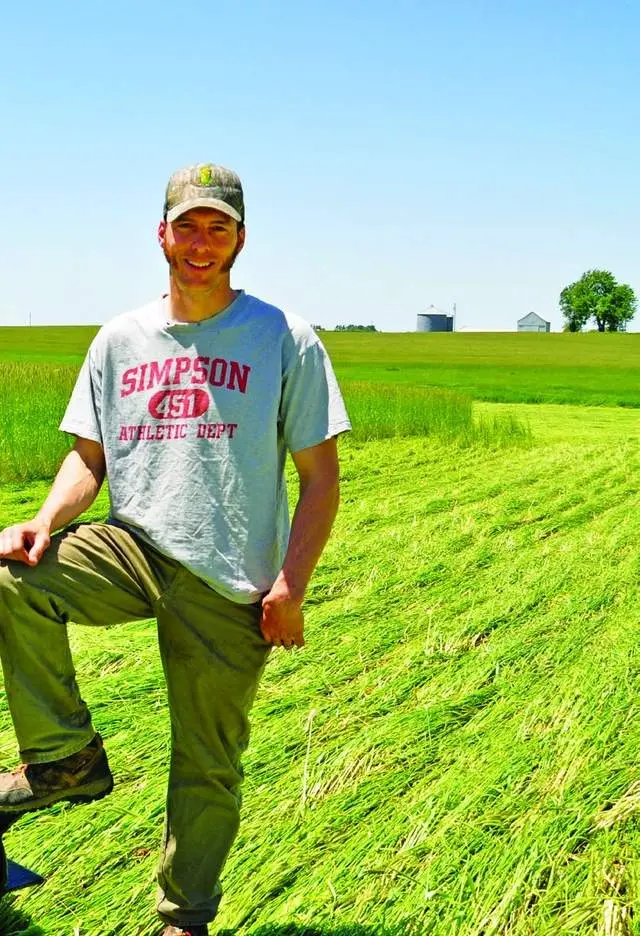
One step Lyle has taken to help reduce levels of CO2 in the atmosphere is the implementation of roller-crimping cover crops on his farm.
“Roller-crimping cover crops is about sequestering carbon,” Lyle says. “There are so many benefits to roller-crimping. You’re managing your nitrogen better because you’re scavenging the nitrogen that’s out there. You’re reducing herbicide cost, because you have less weed pressure. You’re keeping soil erosion from happening. You’re improving the soil’s balance and the microbiology because you have these living roots in the soil over the winter. You’re cleaning up the waterways.
“Some of these are intangible, but many of them are tangible things the farmer can see possibility in.”
Over time, Lyle has become a roller-crimping advocate who speaks to local and statewide organizations about the myriad ways he has seen it benefit his farming practices. He’s also developed a passion for using high voltage electricity to manage weeds, and he readily takes the tool he uses for that — a Weed Zapper — to farms in his area in order to spread the word.
“For the last couple years I’ve been using electricity on other people’s organic fields and helping them use that to manage their weeds,” Lyle says. “These two alternative forms of weed management have worked really well on the organic farms I’m working with. But those tools are not just useful in organic agriculture. Both of those tools — electricity and roller-crimping cover crops — have a major place in the future of all agriculture. I think conventional farmers will be using those tools in the future.”
It’s not just local farmers who have shown an interest in the equipment Lyle uses. He says he’s also been contacted by major implement dealers and manufacturers who want to see the Weed Zapper in action on his farm.
“Engineers have come to take data off the transmission in the tractor to see how it’s performing when the PTO (power take off) generator is engaged and running that electrical unit,” Lyle says. “I can see the writing on the wall, and that’s that the big equipment manufacturers are interested in pursuing these technologies also. They see the potential for something like electricity to have a place in larger agriculture. That’s exciting. It’s a shift.”
Building Community Through Collaboration
As Lyle considers the ways in which farming may change in the decade ahead, he hopes the direction it takes involves greater collaboration in honor of shared goals.
“We are communities of farmers,” Lyle says. “We all want the same thing, and that’s for our schools to not close, and for the businesses on Main Street to remain viable for generations to come. It’s an exciting time in agriculture because of the dynamics of these things. It’s fun to bring people together and form teams.”
Lyle’s enthusiasm about reinvigorating local communities and unifying people to work together is a large component of his drive to do advocacy work in the interest of carbon sequestration. However, that work is also motivated by his need for his own farm to be profitable.
“Farming has to pay,” he says. “When it comes down to it, at the end of the year I can’t lose money. So I need carbon to be worth more. My plan is to develop those practices. Carbon’s not going to make itself worth more on its own, so I want to advocate for that.”
Ultimately, as far as Lyle is concerned, the future of farming is all about balance.
Lyle believes that balance can — and will — be achieved through carbon sequestration, and he is confident it will happen sooner rather than later.
“My hope is that 10 years from now, everything will be cover cropped, and I’ll be getting paid per ton of biomass sequestration,” Lyle says. “That will put my farming in balance with the ecosystem that is around us. That’s my goal.”
Pull quote as printed
“It’s insulting that they say carbon is only worth $10-15 per ton, because it costs the farmer $25 per acre to put a cover crop out…” — Levi Lyle
Check the Specs, as printed
Name: Levi Lyle
Farm Name: Levi’s Indigenous Fruit Enterprises (LIFE)
Location: Keota, Iowa
Acres: 250
Crops: Corn, soybeans
Photo caption as printed
POWER PLAY. With a focus on growing cover crops to help reduce levels of atmospheric CO2, Keota, Iowa, organic farmer Levi Lyle uses alternative weed control technologies, such as zapping them with electricty.