Articles That Inform
Explore articles, research, and practical insights from Levi Lyle covering mental health, ADHD, relationships, anxiety, and personal development.
Interview with Levi Lyle
How often do you communicate and or collaborate with other farmers?
On a weekly basis, I communicate with farmers in the area. That can also mean communicating with Farmers further away. There’s an organization called Practical Farmers of Iowa which is a place that farmers of all types gather and communicate with one another, find resources, and learn about different practices being done for whatever specific thing they might do on their farm, and that has been a really good resource.
Awesome. We have spoken to an organic farmer and a conventional farmer, and you mentioned I think you called it parallel farming. Is that what they call it and what can you tell people?
That is when a farmer Farms organically and also Farms with genetically modified organism seeds then they’re known as parallel and that comes with a level of risk because you have to make sure that you keep things separate both in the seed shed where you keep your inputs and of course then the crop that you’re growing and harvesting. That is something that I have found is important for me to do because farming with traditional methods using chemicals to help manage the weeds is something that we do on some of our Acres because it provides an income. With Organics, sometimes there’s more risk you might lose a crop because there is an insect infestation or something like that and at this time that level of risk is not something I would be able to just fully commit to. So farming parallel is a good fit for us.
Have you noticed is there a difference when it comes to how you communicate with conventional farmers and organic farmers?
The word “how” is a word that takes me in directions because there’s communication that happens every day in farming to make sure that the crop I’m growing isn’t going to be susceptible to a certain herbicide a farmer might be spraying right next to us or a neighbor and so there is communication it is really important to make sure that soybeans don’t get touched with the chemical that it should not and if that were to happen it could kill the field of soybeans and more and more there are so many products out on the market that everybody has to be on the same page, Farmers, neighbor, and Ag Services which put on fertilizer and herbicides that they all have to communicate and in a small community especially that is easier because everybody is familiar with one another and has learned to do
Now if you get into a community where people don’t know each other people might but heads when it comes to that communication of course everybody has their own individual communication styles and communication in our industry is more important all the time because of these complexities.
I didn’t even think about how a farmer spraying in his field could impact you, how do you communicate with someone who might not agree with you.
The question you just asked is the biggest challenge because though we are connected more than ever on Facebook people see and hear each other less. So as a farmer when I think about the need for communicating with somebody who disagrees with what I’m doing or vice-a-versa I think it’s important to put myself in their shoes and then approach the conversation understanding the perspective they’re coming from.
That’s really good. Do you want to tell me about roller crimping?
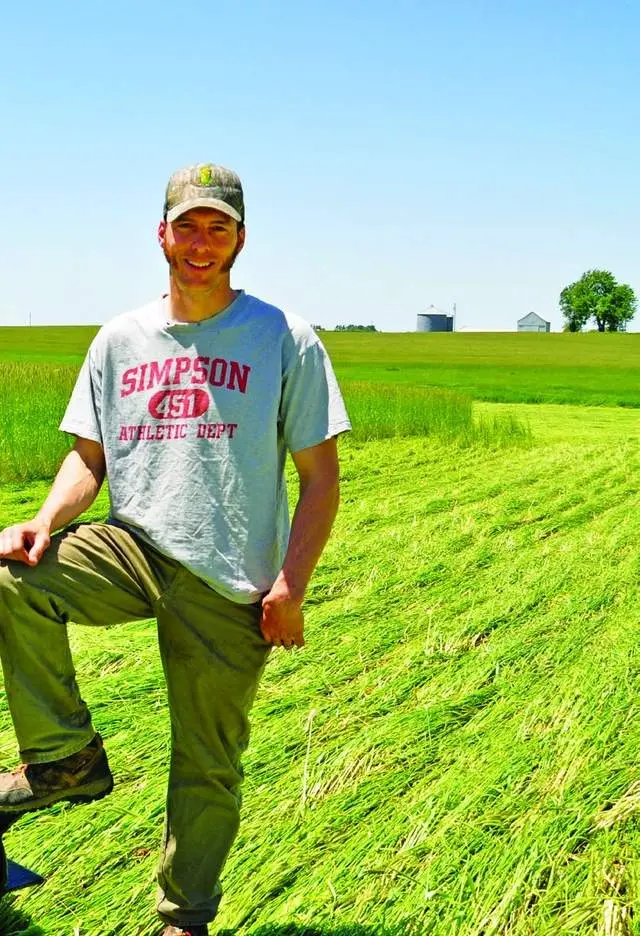
Roller crimping is a process of growing a cover crop usually rye grass in the fall after you’ve harvested and then it will grow through the winter time beneath the snow you don’t even realize it but in the spring when the snow melts. It will grow five or six feet tall then you come in with an Implement called a roller crimper and you go through the field and lay down that grass and create a mat that is like a carpet and weeds cannot come through it. It allows the farmer to plant his crop into that grass or that matte and not use any chemicals and that is the roller crimping.
What is weed zapping?
Weed zapping is when you use electricity to kill weeds so you can use an Implement called a weed zapper and you go into the field where you are growing soybeans and with electricity you can kill any weeds that are sticking their heads up above the soybeans and the electricity basically melts the weeds and as a result you have a clean field with and you have not used any chemicals.
Why doesn’t everybody do that?
The technology is developing. Whenever there is use of electricity, there’s a lot of safety aspects that people must be aware of. It is becoming more and more possible because we’ve got the satellites we’ve got the safety features that are in the computers of a tractor and they help use implements like this in ways that in the past weren’t feasible.
Do you think that there’s any correlation between organic and Better Health
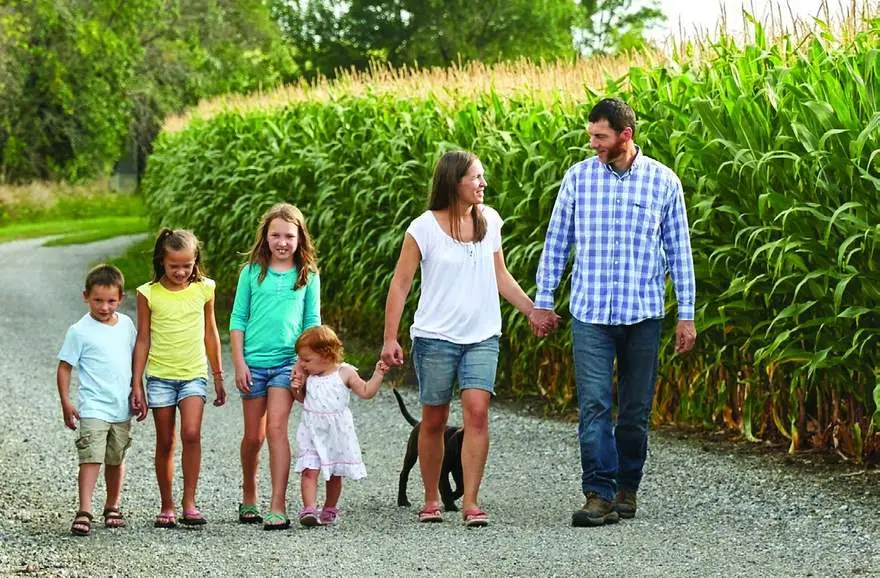
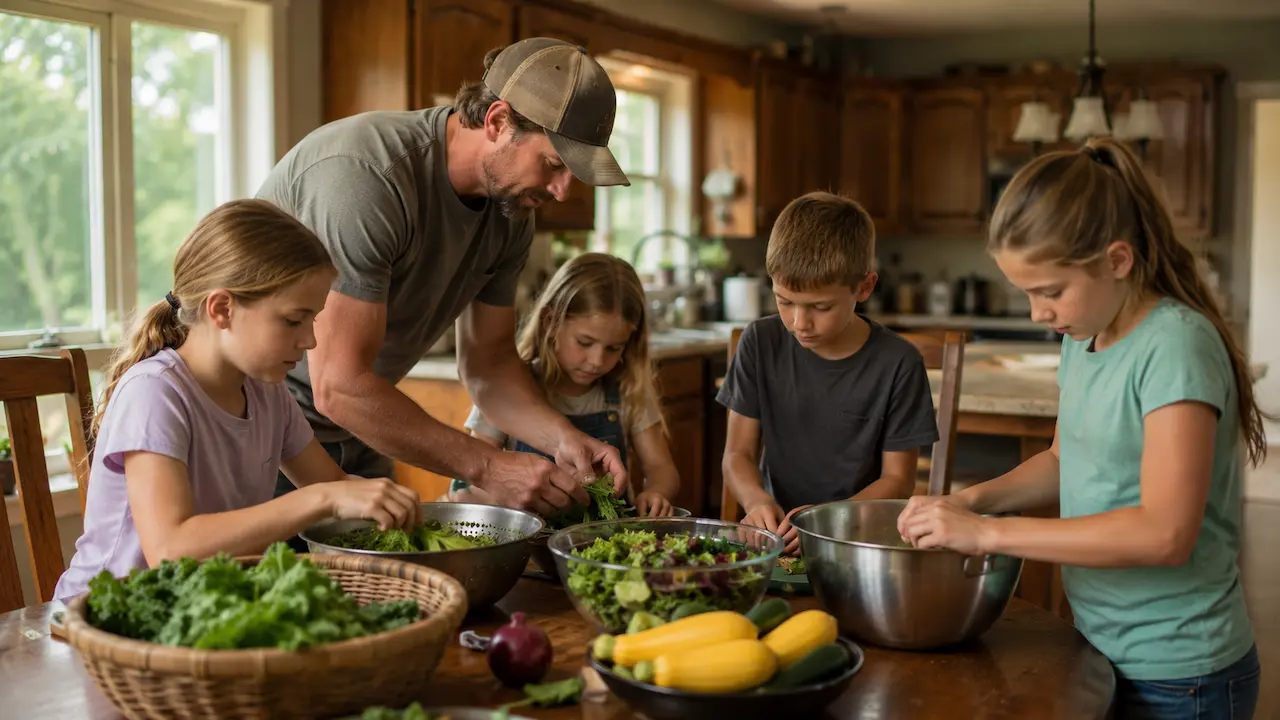
I do think there’s a correlation and I try to show that to my children. We eat healthy foods. When we can, we grow the food ourselves and the biggest part of that is showing children that they can enjoy that process of working with the food. My oldest daughter likes to be in the kitchen doing the cooking the other children are more active wanting to help in the garden and so the balance of all that is kind of a whole picture and I appreciate that my children are so diverse from one another and that we can encompass all the pieces of the picture when it comes to production and preparation.
Okay cool so have you guys always eaten like that have you always been eating the food that you grow and being healthy or have you noticed a difference in your health since you’ve started?
I go all the way back to when I was a child the same age as my six year old that was sitting beside me a little bit ago and I remember my grandparents making fun of sugar and just going SUGAR! I just had to have sugar I thought. It was a bit ridiculous how badly I wanted to eat the sweet things, so I hold that in my mind constantly when I’m talking to my kids about what they should put in their body. Ultimately my wife and I realized that we need for them to make their own food choices you know the best we can do is show them what those choices are and what the results are if you choose nutritious food and so on their own my oldest daughter which is here has chosen to not eat processed sugars processed four, and saturated fats, and so in the kitchen she has a recipe book that she’s preparing and publishing, which is preparing foods with more nutritious ingredients and then the others see that and they want to eat healthier and we hope what we do results in a life long of nutritious eating.
That is awesome that she’s already doing that.
Yeah she will publish that soon while she is still 14.
That is so awesome.
okay
Could you please define regenerative agriculture for us?
Regenerative agriculture is an approach to farming which thinks holistically about growing the plants and then not taking more from the soil and than one puts back and so by farming in a way that thinks about that nutrient cycle then the farm will continue to produce just as much nutritious food in the future.
We’ve spoken not only about regenerative agriculture but about the importance of regenerating small towns. What does that mean to regenerate a small town?
There’s a concept called regenerative economics which is taking what we just described in farming and saying okay well now we have a community we have a school we have a main street with businesses and families that are the essential part of a community so how do we make sure that all of those elements exist in a way that has a contribution which will be maintained moving forward for years to come and that is the concept of regenerative economics.
What can I do to regenerate my small town? How can I do my part?
Buying locally is the most important thing that a person can do to improve that community.
Why is the earth and soil so important what what does it matter?
Well there are many versions of how Earth came to be created sometimes people disagree but what cannot be disagreed upon is that we only have one planet so it’s important to take good care of it as though it is our home because just like the home we’re sitting in today our planet is the only home humans will ever have.
You’ve written a lot, two books poetry, songs, and you do a lot of public speaking, can you talk about the importance of communication?
There are two sides to communication. One is that important need for others to know where you’re at so there can be that relationship but the other part of the communication which I’m doing and the writing and the songs that I do is expressive. So by singing music and telling stories, especially to my children it helps me teach and feel like I am passing on and giving back and so that’s the other part of that need for communication.
Do you think that there’s a lot of good that could be done simply by having discussions and putting thoughts out into the world? Do you think that people might get along better and understand each other more if they talk things through or share ideas.
Whenever people can share something with each other, it’s always going to improve that relationship. I think of examples where two people could be from completely different worlds and maybe don’t speak the same language but there’s only one language of laughter and you can tell by the smile on someone’s face exactly what they’re communicating no matter where they come from in the world so that kind of communication is what bonds all people together and it will be The Guiding Light of our future.
Some kids watching May write poems and songs and have a lot of their own ideas but they don’t speak up because they’re fearful that what they have to say is right or it’s not important enough or it’s not cool. What would you say to them, do you have any advice?
Be a Seeker. we can look at those people whom we admire and ask them well how did you become the way you were to be so inspirational? Almost always that answer is going to be, there were others who I had as mentors who I was able to learn from and so encouraging young people especially to seek out those individuals and to use them as inspiration.
What about people who just want to farm or live their lives doing things their own way the way that it’s always been done maybe farmers who don’t want to try new things they feel they can’t afford to experiment with new ways of doing things. What would you say to them and why?
What we learned about the process of that sometimes it can happen more slowly than we want it to happen and that can be frustrating. Sometimes you have somebody who likes the the way their father or grandfather before them did things. They don’t want to change. Maybe they plowed the land, which is when you turn it over and all the earthworms and soil are exposed to the wind and effects of erosion. We know that over time we need to change those practices for the sake of our planet and our bodies of water. We must change the practices but we also have to remember that there are things about the Traditions that we can learn from that are positive. There was a work ethic in small communities and the generations of my father and grandfather which caused a tight knit community which helped Farmers to lend a hand to their neighbor when they needed. At the same time, we want to shift our Paradigm which is a word that means we flip from doing things one way to another. As we make those changes we have to remember that there are strengths in the way communities function close-knit, like fabric, that we want to keep.
Tell me about your books, you’ve written two?
I like to tell stories and so when I do farm work and I’m riding in the tractor, I sometimes will write the lyrics to a song or write a poem and it helps pass the time but it’s also a place where I can contemplate which is to just think and brainstorm about what it is I’m seeing around me and think about the future of that land that I’m Farming and whether or not my children will be farming that same land much of the work that I have written into poems is information about taking care of the land and working with the land. Then there’s a book that I wrote recently called So God made a Farmer: A Retrospective on the Living Words of Paul Harvey by an Organic Farmer. That retrospective is from the words of Paul Harvey who was a well-known Farm commentator on the radio and he had a poem it’s very famous. Many farmers recognize those words that Paul wrote as very influential so I took the words of Paul Harvey’s poems and described what each of the parts of his Poem mean to me moving forward for organic farming and that’s something that Ithink about- where the past and the future unite. And that’s something, it’s just fun.
Awesome. So what about the front cover of So God Made a Farmer, what’s going on there, is it you and your kids and what are you doing?
This is a picture of my children and I on the back of an Implement called a soybean drill the drill is used to plant seeds in the ground and here we are planting into the rows between a corn crop. With the onset of climate Change, the primary objective of a farmer is to armor the soil and keep it green all year around if possible. There are months out of the Year where that’s not possible because there’s snow on the ground but what we’re doing here is planting seeds between the cornrows so when the corn is harvested, there is already green cover on the ground for the months before the winter arrives and then those seeds survive the winter and when the snow melts in the spring, there they are emerging and so that practice I have written and sung about. It’s just part of the future of Agriculture and so I’m excited to show it to my children and to share with other people.
It’s enjoyable.
For the world to make the changes that need to happen in the next 25 or 50 years, people need to come together and find common ground. So finding commonalities which unite all people will happen. I don’t know exactly what those things will be but without a doubt it’s finding that commonplace that all human beings share, which is going to be the birth of a new way of thinking about our place on this planet. I think Common Ground between all people is what is going to be discovered and right now we have people from different ways of life that have different languages they speak from different continents and we don’t see commonalities but there is a common ground which they’re going to realize and then people will be able to unite.
Based on those things Levi do you have any advice for kids as far as how they can you know help us help you and their parents and teachers to make a difference according to who they are in the world what what they can do?
I think the advice that I would have for kids that are 14 or younger like my children are is that they can make a difference and we often hear the analogy of water droplets in a bucket and it is this powerless analogy that makes us feel like we are so small but together at this time in 2021 we are some 9 billion people and it will continue to grow but those drops of water become what fills the bucket and for each individual to realize that they are a part of it they can make a difference.
What we haven’t yet asked you um is there anything you’ve been thinking you might want to say to kids and parents?
When we look at what we must tackle to get to where we want to be, I often think about the way we think of God and over centuries that has changed and so I’m curious what God is to people. Somebody once came to me and said they didn’t believe in God and so we had a conversation about that and after he expressed his beliefs and then I expressed mine, we came to realize that we both actually believed the same thing we just were using different words and different ideas to explain them and I think that whether we call it God or not that’s where that communication piece comes in. If everybody can engage with one another and find Common Ground then we will realize that there is much to be excited about in our future.